Hampi Travel Guide 2026: UNESCO Heritage, Ancient Ruins and a 2-Day Itinerary
Explore Hampi in 2 days with this travel guide covering UNESCO monuments, the Stone Chariot, temples, transport, stays and travel tips.
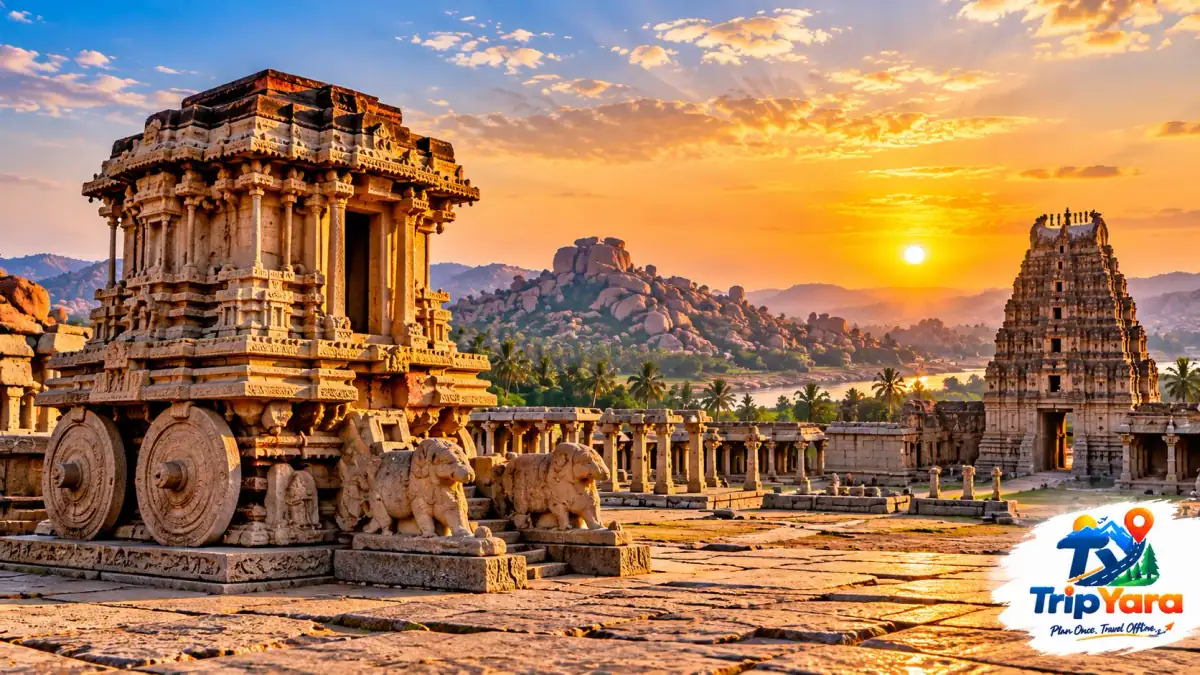
Hampi is a destination where history and landscape come together. Giant granite boulders rise above the Tungabhadra River, ancient temple towers stand beside long market streets, and the remains of the Vijayanagara Empire stretch across a remarkable archaeological landscape.
Located in Karnataka, Hampi is a UNESCO World Heritage Site and one of South India's most rewarding destinations for history lovers, photographers, architecture enthusiasts and slow travellers. This guide covers the best places to see, how to reach Hampi, where to stay and how to organise a practical two-day itinerary.
Why visit Hampi?
Hampi was the capital of the Vijayanagara Empire, which flourished between the 14th and 16th centuries. The surviving landscape includes temples, royal and sacred complexes, bazaars, gateways, water structures and other remains that reveal how this historic city functioned.
UNESCO describes the site as the remains of the Vijayanagara capital, with more than 1,600 surviving features across its wider heritage landscape. Hampi was inscribed on the UNESCO World Heritage List in 1986.
What makes Hampi distinctive is the way its architecture sits within the natural setting. Granite hills, open plains and the Tungabhadra River form part of the experience rather than simply providing a backdrop.
Best places to visit in Hampi
1. Virupaksha Temple
Virupaksha Temple is one of Hampi's most important living places of worship. Dedicated to Lord Shiva, it stands near the historic Hampi Bazaar and is closely connected with the sacred centre of the old city. Dress respectfully, follow temple instructions and check current visiting arrangements before going.
2. Vijaya Vittala Temple and the Stone Chariot
The Vijaya Vittala Temple complex is among Hampi's most celebrated monuments. Its elaborate architecture, pillared halls and sculptural details reflect the craftsmanship of the Vijayanagara period.
The Stone Chariot is the best-known landmark within the complex. It is a granite shrine designed as a ceremonial chariot and dedicated to Garuda, the vehicle of Lord Vishnu. Allow enough time to explore the wider complex rather than visiting only for a photograph.
3. Hemakuta Hill
Hemakuta Hill is known for its group of temples and broad views across Hampi's rocky landscape. It is a popular place to experience the changing light around sunrise or sunset. Wear shoes with good grip and take care on uneven stone paths.
4. Sasivekalu and Kadalekalu Ganesha
These large Ganesha sculptures are notable examples of Hampi's monolithic stone carving. They are useful stops when exploring the sacred centre and nearby temple areas.
5. Ugra Narasimha Statue
The Ugra Narasimha is a monumental sculpture carved from a single granite rock. It is one of the most striking individual sculptures in Hampi.
6. Royal Enclosure and Queen's Bath
The Royal Enclosure contains remains associated with the administrative and ceremonial centre of Vijayanagara. The Queen's Bath is a distinctive pavilion with an interior pool and decorative architectural details. Explore the area slowly: the remains are spread out, and the scale of the former city becomes clearer as you walk between structures.
7. Lotus Mahal and Elephant Stables
The Lotus Mahal is admired for its graceful arches and distinctive design. Nearby, the Elephant Stables form a long structure with a series of domed chambers. Together, they offer a glimpse of the architectural variety found in the royal centre.
8. Matanga Hill
Matanga Hill is known for panoramic views over Hampi. The climb involves rocky and uneven sections, so start early, carry water and avoid attempting it in harsh midday heat. Check local access and safety advice before setting out.
9. Tungabhadra River and Anegundi
The river is central to Hampi's geography and sacred landscape. Anegundi, across the river, offers another perspective on the region's heritage and village life. River crossings and boat services can depend on water levels, weather and local operating conditions, so confirm arrangements locally.
A practical 2-day Hampi itinerary
This itinerary groups nearby attractions to reduce unnecessary backtracking. Adjust timings to current monument access, weather and local conditions.
Day 1: Sacred Centre and the river landscape
Early morning
- Start around Virupaksha Temple and Hampi Bazaar.
- Explore the nearby Ganesha sculptures and the Hemakuta Hill temple area.
- Take a break during the warmer part of the day.
Afternoon
- Visit the riverside area and explore the heritage landscape at a relaxed pace.
- If you plan to cross the river, check the current boat or road connection before leaving.
Evening
- Choose a permitted viewpoint for sunset, such as the Hemakuta Hill area.
- Return to your accommodation and keep the evening flexible.
Day 2: Vittala Temple and the Royal Centre
Early morning
- Visit the Vijaya Vittala Temple complex and Stone Chariot.
- Arrive early to allow time for the complex and to avoid the strongest afternoon sun.
Afternoon
- Explore the Royal Enclosure, Queen's Bath, Lotus Mahal and Elephant Stables.
- Include the Ugra Narasimha statue if it was not covered on Day 1.
Evening
- If time and energy allow, visit a nearby viewpoint or enjoy a relaxed meal.
- Keep extra time for transfers back to Hosapete.
If you enjoy archaeology, photography or slower travel, consider staying for a third day. Hampi's heritage landscape is extensive and a rushed visit can mean missing the details.
Best time to visit Hampi
The cooler months from October to February are generally the most comfortable for walking around the monuments. Karnataka Tourism identifies October to February as a favourable period for sightseeing.
November to February is a practical window for many visitors, but daytime sun can still be strong. March to May can be very hot, while monsoon months bring rain that may affect walking routes, outdoor plans and river activities.
Check the local forecast close to departure and plan outdoor sightseeing for early morning and late afternoon.
How to reach Hampi
By train
Hosapete Junction is the nearest major railway station commonly used to reach Hampi. It is around 13–15 km from the main Hampi area, depending on the exact destination. From the station, continue by local taxi, auto-rickshaw or other available transport.
By road
Hampi is connected by road to Bengaluru and other cities in Karnataka. Karnataka Tourism gives the Bengaluru–Hampi road distance as approximately 340 km. Journey time varies with traffic, route and stops, so check a live route planner before travelling.
By air
Jindal Vijaynagar Airport near Toranagallu is a regional airport option. Flight schedules and connectivity can change, so verify current services before relying on it. Travellers may also compare flights to larger airports and continue by road or rail.
Where to stay in Hampi
You can choose accommodation in or around Hampi, or in nearby Hosapete.
- Near Hampi: Useful if you want to start sightseeing early and stay close to the heritage landscape. Check current access, facilities and local rules before booking.
- Hosapete: Offers a wider town base and can be convenient for railway arrivals, transport connections and a broader choice of accommodation.
- Homestays and guesthouses: Can suit travellers who prefer a smaller property and local interaction.
- Hotels and resorts: Compare location and transfer time, not only room price.
During busy weekends and festival periods, book ahead and confirm the property's exact location and transport arrangements.
Food to try
Look for local North Karnataka meals and regional dishes at established restaurants and homestays. Jowar roti meals are a familiar regional option. You will also find common South Indian breakfast choices such as idli, vada and dosa.
Carry drinking water while sightseeing and choose clean, reliable places to eat. Avoid leaving food waste or plastic at heritage and river sites.
Practical travel tips for Hampi
- Wear comfortable footwear. Many attractions involve walking over uneven stone surfaces.
- Start early. Morning hours are generally more comfortable for outdoor exploration.
- Carry sun protection. Bring a hat, sunscreen and reusable water bottle.
- Respect active places of worship. Follow dress guidance, photography rules and instructions from temple staff.
- Protect the monuments. Do not climb on fragile structures, carve or write on stones, or remove any material.
- Check local access. Monument timings, entry arrangements, river crossings and activity availability can change.
- Plan transfers. The heritage sites are spread out; decide whether you will use local transport, a bicycle or a guided vehicle for each section.
- Keep a flexible schedule. Heat, crowds and local conditions can affect how quickly you move between sites.
Frequently asked questions about Hampi
Is Hampi a UNESCO World Heritage Site?
Yes. The Group of Monuments at Hampi was inscribed on the UNESCO World Heritage List in 1986.
How many days are enough for Hampi?
Two days are a practical starting point for the major highlights. Three days allow a more relaxed visit and time for additional sites and the surrounding landscape.
What is the nearest railway station to Hampi?
Hosapete Junction is the nearest major railway station commonly used by visitors, around 13–15 km from the main Hampi area.
What is the best month to visit Hampi?
The cooler season from October to February is generally more comfortable for exploring the monuments. Check the forecast and local conditions before travelling.
Can Hampi be explored by bicycle?
Cycling is one way to explore parts of the area, but distances, road conditions, heat and monument access vary. Choose a route that matches your fitness and check where bicycles can be used or parked.
Is Hampi suitable for families?
Hampi can be a rewarding family destination, especially for those interested in history and architecture. Plan shorter sightseeing blocks, carry water and take extra care around rocky paths, steps and river areas.
Plan your Hampi trip with TripYara
Hampi has many places worth saving, and its spread-out heritage landscape makes a clear daily plan useful. Use TripYara to organise a day-wise itinerary, save monuments and viewpoints, prepare a packing checklist and keep essential trip details available offline.
Save your hotel information, transport details and important addresses before departure. Download any offline maps you may need in advance; live search, weather, traffic and some map features still require an internet connection.
Plan Once. Travel Offline.
Official sources
- Karnataka Tourism – Hampi destination guide: https://karnatakatourism.org/en/destinations/hampi/
- UNESCO World Heritage Centre – Group of Monuments at Hampi: https://whc.unesco.org/en/list/241
- Ministry of Culture – Group of Monuments at Hampi: https://culture.gov.in/group-monuments-hampi
Monument access, timings, entry fees, transport services and local activities may change. Confirm current details with official authorities and local operators before travelling.
- #hampi
- #karnataka tourism
- #unesco heritage
- #hampi travel guide
- #south india travel
- #historical places