How to Plan a Road Trip in India: Complete Step-by-Step Guide
Learn how to plan a road trip in India with route planning, fuel stops, budgets, packing tips, safety checks and offline trip access.
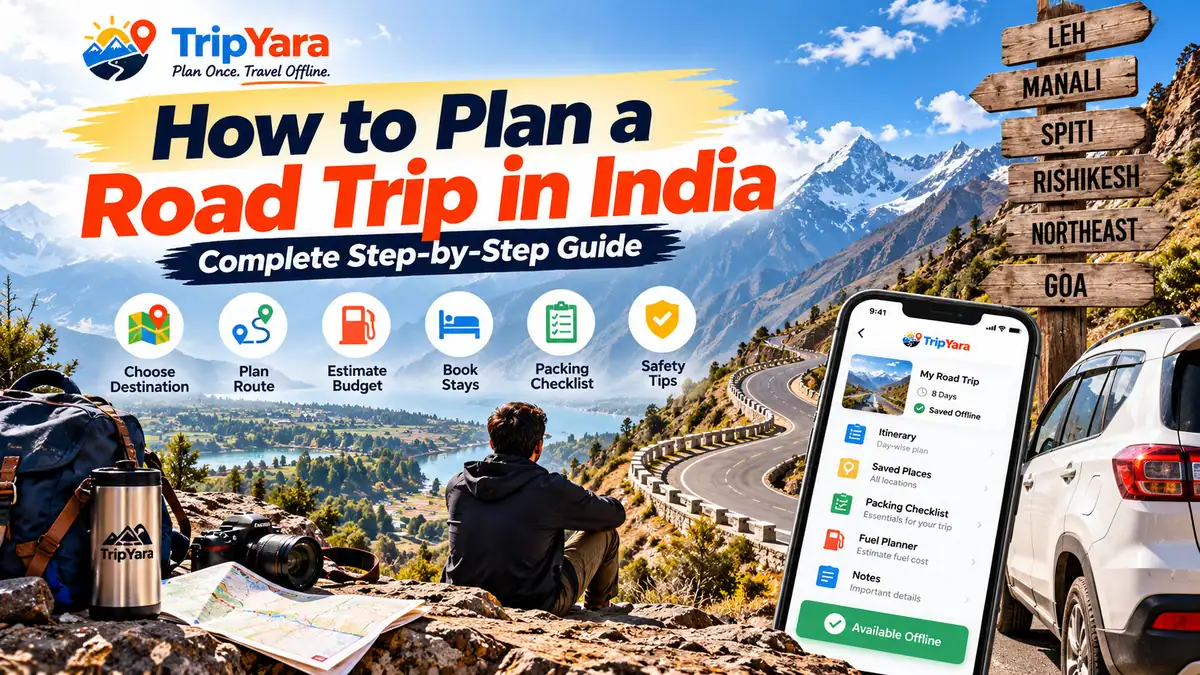
A road trip gives you the freedom to explore at your own pace, stop at unexpected viewpoints and discover places beyond the usual tourist checklist. But a smooth journey takes more than choosing a destination and starting the engine. You need a realistic route, a sensible budget, planned breaks, the right essentials and a backup plan for areas with limited mobile network coverage.
Whether you are planning a weekend escape, a family holiday or a long mountain drive, this step-by-step guide will help you prepare for a road trip in India.
1. Choose a Destination That Fits Your Time
Start by deciding how many days you have, who is travelling and how much driving everyone is comfortable with.
- One or two days: Choose a destination that can be reached without spending most of the trip behind the wheel.
- Three to five days: Explore a wider region and add a few worthwhile stops along the route.
- A week or longer: Plan the journey in stages instead of trying to cover too many places every day.
Consider the season, road conditions, weather, permits and local restrictions before finalising your destination. Mountain destinations can require extra flexibility because rain, snow, landslides or road closures may change your plans.
Tip: Build your itinerary around the experience you want—mountains, beaches, heritage, wildlife or a relaxed drive—not just the number of places you can tick off.
2. Map Your Route and Daily Driving Plan
Once you choose a destination, compare possible routes. A route that looks shortest on a map is not always the quickest or easiest to drive.
Check:
- Total distance and estimated driving time
- Highway, ghat and mountain-road sections
- Toll roads and likely toll costs
- Fuel stations and suitable rest stops
- Food, toilets and overnight accommodation
- Road restrictions, permits and seasonal closures
Divide a long journey into manageable driving sections. Add breaks for meals, stretching and fatigue, and avoid planning every day so tightly that one delay ruins the schedule.
Use current navigation and official road or local advisories before departure. Estimated travel times can change with traffic, weather and roadwork.
3. Plan Stops, Not Just the Destination
The journey is part of the trip. Identify a few useful or interesting stops along the route, such as viewpoints, local attractions, food stops or places to stretch.
For each stop, note:
- Its name and approximate location
- How far it is from the previous stop
- Whether it is open or accessible on your travel date
- How much time you want to spend there
- A backup option if you need to skip it
Keep some free time in your schedule. You may discover a beautiful viewpoint or need to take a longer break than expected.
4. Estimate Your Road Trip Budget
Create a budget before leaving so that the major expenses do not come as a surprise.
Fuel
Fuel cost = (Total distance ÷ Vehicle mileage) × Fuel price per litre
For example, if your planned journey is 600 km, your vehicle averages 15 km per litre and fuel costs ₹100 per litre:
- Estimated fuel needed: 600 ÷ 15 = 40 litres
- Estimated fuel cost: 40 × ₹100 = ₹4,000
This is only an example. Actual mileage and fuel prices vary, and mountain driving, traffic, idling, detours and vehicle load can increase consumption.
Other expenses to include
- Tolls and parking
- Food, snacks and drinking water
- Accommodation
- Sightseeing tickets and activities
- Local transport or permits, where applicable
- Emergency expenses and unexpected detours
Keep a contingency buffer rather than spending your entire budget on planned expenses. If you are travelling with friends, agree in advance how shared costs will be divided and tracked.
5. Check Your Vehicle Before Departure
A basic vehicle check can help you avoid preventable delays.
Before the trip:
- Check tyre condition and tyre pressure, including the spare tyre.
- Test brakes, lights, indicators and windscreen wipers.
- Check engine oil, coolant and other fluids according to the vehicle manual.
- Confirm that the battery is in good condition.
- Carry the tools and emergency equipment recommended for your vehicle.
- Make sure your driving licence, registration certificate, insurance and pollution certificate are valid and accessible as applicable.
For a long or remote route, consider a professional inspection before leaving. Do not ignore warning lights, unusual sounds or tyre damage.
6. Pack Smart With a Road Trip Checklist
Packing depends on your destination, weather, trip length and activities. Avoid overpacking, but do not leave out essentials.
- Driving licence and vehicle documents
- Phone, charging cable and car charger
- Power bank
- Water and snacks
- First-aid kit and personal medication
- Torch or headlamp
- Weather-appropriate clothing and comfortable footwear
- Sunglasses, sunscreen and reusable water bottle
- Cash and a payment backup
- Offline itinerary and important addresses
- Emergency contacts
- Basic vehicle emergency items appropriate to your vehicle and route
For cold or high-altitude destinations, pack layers and check local weather and travel advisories. Carry only what you need and keep frequently used items easy to reach.
7. Prepare for Limited or No Internet
Mobile network coverage can be unreliable on remote highways, in valleys and in mountain regions. Do not depend entirely on a live internet connection.
Before departure:
- Download offline maps in a navigation app that supports them.
- Save your accommodation details, addresses and contact numbers.
- Keep your route and planned stops available offline.
- Share your broad itinerary with a trusted person.
- Download essential tickets or confirmations that you may need.
- Keep your phone charged and carry a power bank.
Remember that offline maps and saved information do not necessarily include live traffic, current weather, updated road closures or live place searches. Check these while you have a reliable connection and confirm important conditions again before entering remote areas.
Plan your journey with TripYara
TripYara helps you organise a road trip with a day-by-day itinerary, route and stop planning, fuel planning and a packing checklist. You can save your trip in advance and access saved trip information offline when network coverage is weak.
Create and save your trip while you are online. Live weather, online place searches, traffic and some map features may still require an internet connection.
- Website: https://tripyara.in/
- Android app: https://play.google.com/store/apps/details?id=com.tripyara.app
8. Put Safety First
A good itinerary should make the trip safer, not pressure you to drive faster.
- Do not drive when sleepy or exhausted. Stop somewhere safe and rest.
- Take breaks regularly, especially on long drives.
- Follow speed limits and local traffic rules.
- Never use your phone while driving; set navigation before moving or ask a passenger to help.
- Check weather, road conditions and official advisories before entering remote or mountainous areas.
- Avoid driving into unfamiliar, isolated routes after dark where possible.
- Do not cross barricades or attempt to pass through closed roads.
- Keep emergency contacts and accommodation details accessible.
- Tell someone you trust about your route and expected arrival time.
For mountain trips, allow extra time and be prepared to change plans if conditions become unsafe. No viewpoint or schedule is worth taking an unnecessary risk.
9. Share Your Plan and Coordinate With Your Group
If you are travelling with family or friends, agree on the route, stops, budget and meeting points before departure.
For multiple vehicles:
- Share the planned route and key stops with everyone.
- Set clear regrouping points instead of expecting every vehicle to stay together continuously.
- Keep important contact details available.
- Agree on what to do if a vehicle gets separated or loses network coverage.
- Make sure every driver understands the plan and can make safe decisions independently.
Do not assume that ordinary phone calls or messaging will work everywhere. For remote trips, prepare a practical fallback plan before leaving.
10. Keep the Itinerary Flexible
Planning is useful, but road trips rarely go exactly as expected. Traffic, weather, roadwork, fatigue and unexpected discoveries can all affect the schedule.
Prioritise the places that matter most, mark optional stops separately and leave room for rest. If you are running late, skip an optional stop rather than rushing or driving while tired.
At the end of each day, review the next day's route, weather and departure time. Make changes while you have a reliable connection.
Road Trip Planning Checklist
- Destination and travel dates confirmed
- Route and daily driving sections planned
- Stops, fuel stations and rest breaks identified
- Budget estimated, including a contingency buffer
- Vehicle checked and documents verified
- Accommodation and essential contact details saved
- Packing checklist completed
- Offline maps and trip details prepared
- Weather and road advisories checked
- Itinerary shared with a trusted person
- Phone, charger and power bank ready
Frequently Asked Questions
How far should I drive in one day on a road trip in India?
There is no single ideal distance. It depends on road quality, traffic, terrain, weather and driver experience. Plan by realistic driving time, include breaks and avoid an itinerary that requires you to drive when tired.
How do I calculate fuel costs for a road trip?
Divide the planned distance by your vehicle's expected mileage to estimate fuel required, then multiply by the fuel price per litre. Add a buffer for detours, traffic, hills and changing conditions.
What should I do if there is no mobile network?
Prepare before entering the low-coverage area. Download offline maps, save your itinerary and important contacts, keep your phone charged and share your route with someone you trust. Live traffic, weather and online searches may not work offline.
What should I check before a long road trip?
Check tyres, brakes, lights, fluids, battery and the spare tyre. Verify your vehicle documents and review weather, road conditions and any permit requirements for your route.
Can TripYara help me plan a road trip?
TripYara helps organise itineraries, routes and stops, fuel planning and packing checklists. You can save trip information in advance for offline access. Create your trip while online because live weather, online searches, traffic and some map features need connectivity.
Make Your Next Road Trip Easier With TripYara
A memorable road trip starts with a plan that is practical, flexible and ready for the unexpected. Organise your route, prepare your essentials, estimate your expenses and save the information you may need before you lose network coverage.
Plan your next adventure with TripYara.
Visit https://tripyara.in/ or get the Android app: https://play.google.com/store/apps/details?id=com.tripyara.app
Travel conditions, fuel prices, permits and road access can change. Verify current information with official or local sources before departure.
- #road trip india
- #road trip planning
- #travel tips
- #route planning
- #fuel planning
- #packing checklist
- #offline travel
- #tripyara